
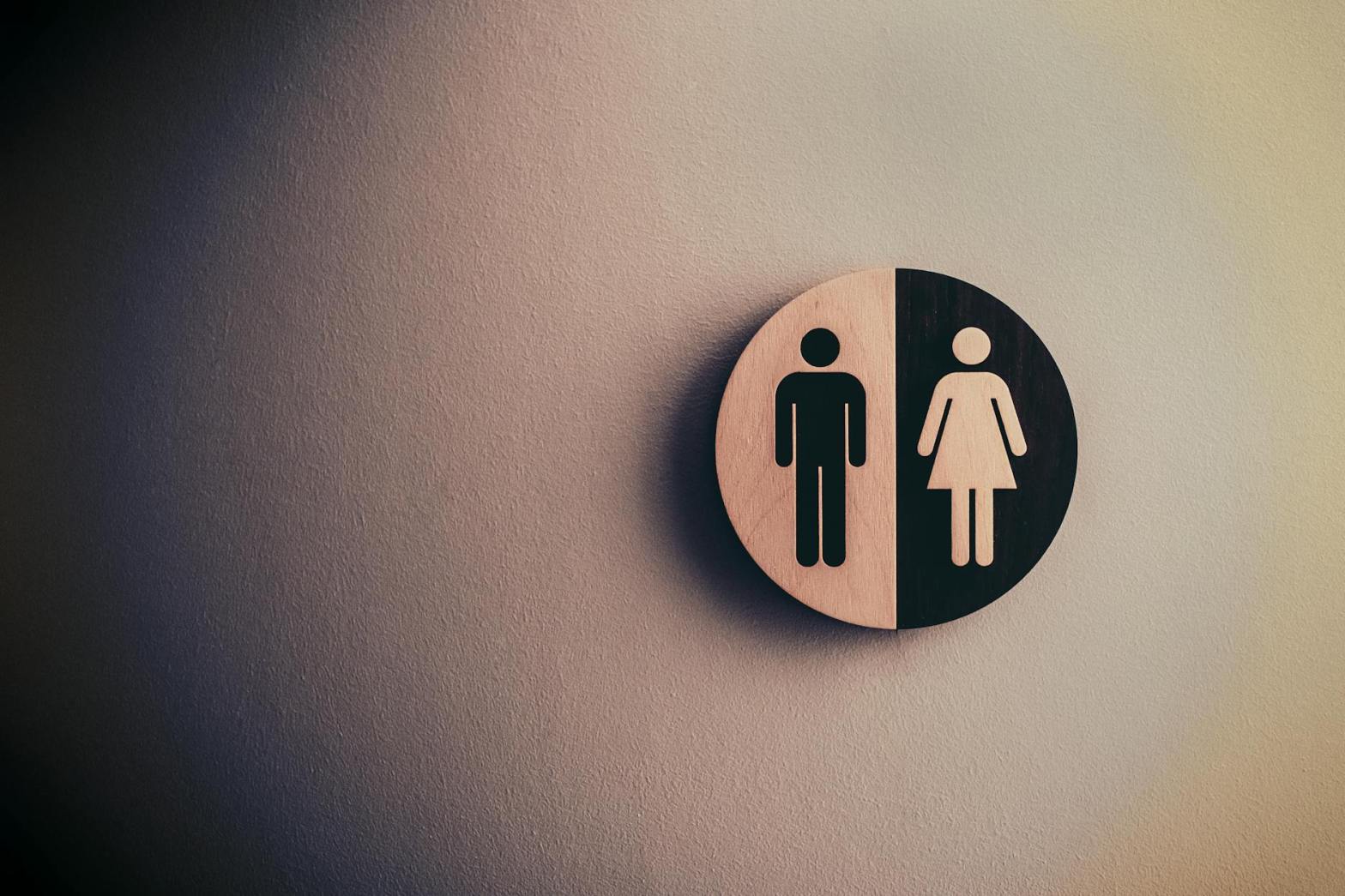
One of the barriers faced by the LGBTQ+ community (and in particular the trans community) in gaining acceptance from wider society, is a lack of inclusive language. The languages we speak, which have often evolved in times of strict societal gender norms, include a plethora of gendered terms which exclude and erase the existence of many who identify outside the binary of male or female. Non-binary people have to navigate a gender binary which is quite often ingrained into the structure of the language itself.
As the language enthusiast I am, my first question when I consider gender-neutral speech is how it is adopted in different languages with different grammatical structures and linguistic systems. I have always been curious about how different languages navigate (or don’t) the grammatical complications posed by inclusive speech. Being a speaker of Spanish and Chinese, two language which differ hugely in their grammatical structure, I have persistently pondered how these two distinct languages adapt themselves in different ways to become more inclusive. I wonder about other languages too. Is it easier to navigate the linguistic difficulties of being trans or non-binary if you speak English, or if you speak Hungarian? Is it is easier to feel included linguistically if you are a speaker of Arabic, or Chinese?
The question of whether is it “easier” to be a trans or non-binary person as a speaker of a particular language, is a huge sociolinguistic question which is almost impossible to answer. However, I do hope I can perhaps shed some light on the topic by briefly outlining the issues of non-binary language in a sprinkling of languages around the world. With over 7000 languages spoken in the world today, this is a vast topic that I will simply be skimming the surface of, but I seek to at least satiate my curiosity – and hopefully yours too!
English and other languages without noun classification
Luckily for English speakers, English is one of the easier languages to adapt to gender inclusive language. This is because nouns in English are not gendered and therefore do not require a grammatical change when made gender-neutral. Moreover, English has a ready-made gender-neutral pronoun in the use of “they” in the singular form, which, contrary to the complaints from linguistic purists, has been used in this way in English since as far back as the 12th Century (according to the OED). For example, if you didn’t know someone’s gender, it is already grammatically correct to ask in English “what is their name?” using the singular form. Despite all this, many words in English are inherently binary e.g. aunt/uncle, ladies/gentlemen, husband/wife. Whilst we are beginning to use more and more gender neutral terms such as “parent”, “police officer”, “chairperson”, it nevertheless remains difficult to remove binary language from everyday speech without having to think carefully and be creative. Recent controversies on the use of trans-inclusive terms such as “people who menstruate” show that the language used to accommodate trans and non-binary identities remains a controversial topic in today’s society. Due to the lack of gendered nouns, changing terms like “husband/wife” to “spouse” is an easy swap in English. Furthermore, neologisms like “pibling” (a portmanteau of parent and sibling) used as an alternative to aunt/uncle do not affect the grammar of the language in any way.
A great number of languages fall into the no-noun-classification category, these are primarily Turkic, Uralic (such as Finnish), and Austronesian languages (such as Tagalog). In fact, many of these languages have no gendered pronouns to navigate because, unlike English (which classified nouns by gender in older forms of the language and retain this in pronouns only), these languages have never had grammatical gender. Finland actually takes great pride in the inherent gender inclusivity available in the Finnish language. The country actually ran a campaign about their gender-neutral third-person pronoun hän, which they view as a symbol of inclusivity. The campaign aims to share the pronoun with the world in order to promote gender equality. Turkish artist Madir Oktis said in an article in the Financial Times that the lack of grammatical gender makes the Turkish language more inclusive and has an impact on art: “Even if it’s a heteronormative person writing that story, you cannot find things to exclude you”. However, LGBT rights are not protected in Turkey and President Erdogan been vocal in his opposition to LGBT matters, clearly stating “we’re against LGBT”. Whilst the “o” pronoun in Turkey is very similar to “hän” in Finland, it is clear that the gender neutral pronoun can be viewed as “progressive” only in a country where the politics also reflect the inclusivity of the language. Another problem in these apparently neutral languages is that borrowings from gendered languages are fairly common and create binaries which are not natural to the languages’s grammatical structure but offer gendered options such as komikus/komika (male/female comedian), medikus/medika (male/female doctor) to give examples of latinate nouns in Hungarian (Hellinger & Motschenbacher, 2015, p.206). Furthermore, nouns which appear to be gender neutral, such as “hemşire” (nurse) are often accompanied by a qualifier like “erkek hemşire” (male nurse), to give an example in Turkish, which adds gender back into the language to reflect and co-opt social biases .
Gendered languages
In languages with grammatical gender, the issue becomes a lot more complex – and interesting!
What is grammatical gender? Grammatical gender is a linguistic structure in which all nouns within a language are generally categorised into two or three categories comprising of masculine, feminine, and sometimes neuter. For example, “table” in Spanish is always feminine: “la mesa”. Whilst there is nothing inherently feminine about a table, this use of gender is grammatical, which means it is ingrained into the structure of the language, rather than corresponding to the meaning. Of course, in most of these gendered languages, if a noun is male or female-specific, this will correspond with its gender class e.g. the father, “el padre”, is always masculine in Spanish. Also, not only does the definite article “el” correspond to the gender, but any other word categories which correspond to the noun must also agree e.g. “el padre es guapo”. The adjective “guapo” meaning “handsome” must end in an “o” because the noun it describes is masculine. Gender is completely ingrained grammatically into the language, hence I am calling it a “gendered language”.”Gendered languages” are mainly Indo-European, which include most languages in Europe: from Russian to Icelandic, Romanian to Welsh. Semitic languages like Arabic and Hebrew also fall into the category of grammatically gendered.
It’s clear that the impervious nature of gender in these languages makes finding gender neutral alternatives difficult. Taking Spanish as an example as this is what I am familiar with, if “el padre” is always masculine and “la madre” is always feminine, how do we find a gender neutral term for a parent which can function grammatically within the language? One of the solutions in Spanish is defaulting to the plural, which is gender neutral i.e. “los padres” includes parents of all genders. However, many believe that this solution marks the masculine as “default” and the feminine “other”. One of the popular solutions proposed to this was the use of “e” (and sometimes “@“ and “x” in the written form) in place of the “o” and “a” that usually signifies masculine or feminine gender. For example, “amigos” becomes “amigues” (friends) or “alumnos” becomes “alumn@s” (students). For example, Latinx is a term that is now frequently used in English instead of the term Latino or Latina. Spanish, which is so widely spoken, is a good example of how the gender neutrality of a language, particularly one that is not inherently inclusive, depends on the receptiveness of its speakers to change. Argentina, for instance, actively teaches gender-neutral terms in schools, whereas Mexico has gone so far as to ban them in education.
A contrast can be found in Swedish, a language which historically had only masculine (han) and feminine (hon) pronouns. In 2012, however, the gender-neutral pronoun hen was officially introduced. It is now taught in schools, used in media, and even appears in legal documents. The success of hen reflects Sweden’s broader commitment to gender equality and LGBTQ+ rights, showing how inclusive policies can support the rapid adoption of inclusive language.
French, by contrast, provides an example of resistance. Like Spanish, French has masculine and feminine forms for almost every noun and adjective, but attempts at neutralisation have met with strong opposition. The use of iel (a gender-neutral pronoun blending il and elle) and écriture inclusive (inclusive writing such as étudiant·e·s) has caused national controversy. The Académie française, the guardian of the language, has condemned these innovations as a “mortal peril”, and in 2021 the Ministry of Education banned inclusive writing in schools. Here, the deeply traditional approach to language – combined with political conservatism – has prevented inclusive terms from being widely adopted.
Classifier languages
Classifier languages such as Chinese and Thai do not mark nouns for gender, instead categorising them through classifiers based on shape or qualities. For example, in Mandarin Chinese, 一支笔 yī zhī bǐ literally means “one long-thin-object pen,” with the classifier zhī tracking the noun. In spoken Chinese, pronouns are also neutral: tā can mean “he,” “she,” or “they.” However, the written language was artificially gendered in the early 20th century under Western influence, leading to the creation of distinct characters for he “他” (with the original “person” meaning attached) and she “她” (with a “female” meaning attached). I can sense my fellow feminist’s outrage at this, but believe it or not, this change was adopted as part of greater recognition of women, as opposed to trying to remove their personhood! However, the change now reinforces the binary in written form even though it does not exist in speech. Some people in China’s LGBTQI+ community have begun adopting a new non-binary version of the pronoun “X也”, which removes the added gendered element of the character by replacing it with the letter “X”. Others believe existing Chinese characters should be used, and some Hongkongers are using 佢 (pronounced qú). Some are simply using the phonetic guide version (called pinyin), simply written as “ta”, to remove the character altogether. The question here that many are asking is, which method is more sustainable and likely to be adapted into everyday language? The truth that LGBTQI+ rights in China are so underdeveloped at this stage, that any gender neutral written pronoun will likely remain on the fringes for quite some time, hence the lack of a universally preferred and adopted gender neutral alternative.
To offer another example, Thai presents a similar but more flexible case. The Thai language has no grammatical gender, yet gendered pronouns (phǒm for men, dìchǎn for women) and polite particles (-khrap, -kha) have been borrowed into the language as reflections of social hierarchy and the cultural importance of gender roles (Hoonchamlong, 1989). Crucially, Thai also offers alternatives such as khâaphachâw, which can be used neutrally and respectfully, showing that gender neutral pronoun choice is still available in the language, with no need for China’s search for an alternative. Furthermore, having recently legalised same-sex marriage, Thailand is generally a more inclusive place to live for LGBT people, despite the fact that trans rights are still an issue. Whilst this flexibility makes Thai more inclusive than Chinese, both languages illustrate how societal expectations can reintroduce gender distinctions even where the grammar itself is neutral.
Is adaptation the way forward?
In a word, yes. In my opinion, we must view languages as living things, not as rusty old tools of communication that we use in the same way for generations with no modification. Our modern prescriptivists would say that changing the structure of language to be inclusive is confusing and unnecessary and that those who demand these changes are entitled, unrealistic and naive. I say there’s a reason that we no longer use clunky terms like “thou” or “thee” in everyday conversation. Languages evolve naturally over time to suit the communicative needs of their speakers.
Language develops for ease of communication. These “new words” designed to make language more inclusive for all are not a burden, but rather a continuation of the natural evolution of language. Just as we have coined new words for new technologies or social realities, we can coin or adapt words that reflect a fuller spectrum of human identities. Far from corrupting language, inclusive terms enrich it.
Conclusion
This article has discussed only the grammatical constraints of gender inclusive pronouns in different languages. This answers only one small part of the question “are some languages inherently more inclusive than others?”. As mentioned above, languages are living, breathing things. As such, the ability of a language to include all forms of gender expression does not solely rest on its inherently inclusive or exclusive structure, but on the societal structures within the country where it is spoken. For example, whilst both Finnish and Turkish have a gender-neutral pronoun, Finnish actively promotes this pronoun whilst the Turkish government continues to persecute trans people despite its accidentally inclusive pronoun. Equally, Spanish-speaking Argentinian schools teach a gender-neutral pronoun in schools, whilst Spanish-speaking Mexico has officially banned the use of gender-neutral terms like todes in classrooms, citing the protection of “language purity”. The examples of Chinese and Thai, classifier languages with no gender in their history, demonstrate that neutral languages can adapt to a binary following decades of western influence. These examples highlight that the inclusivity of a language is shaped not only by grammar, but also by politics, education systems, and social will.
In the end, whether a language feels inclusive or exclusionary has less to do with its grammatical skeleton than with the openness of its speakers to change. Language and society evolve hand in hand: one pushes the other forward, sometimes reluctantly, sometimes eagerly. If inclusivity is truly our goal, then adapting language is not just possible, it is inevitable.
Table: examples of gender neutral pronouns
| Language | Gender neutral pronoun | Inherent in the language? | Status |
|---|---|---|---|
| English | “they” | Yes | Becoming more widely accepted |
| Turkish | “o” | Yes | No other option |
| Finnish | “hän” | Yes | No other option |
| Spanish | “elle” | No | Becoming more widely accepted |
| French | “iel” | No | Not widely accepted |
| Swedish | “hen” | No | Widely accepted |
| Chinese | 他/她 (spoken) ta/X也/佢 (written alternatives) | Yes | Gender neutral only in spoken form, written gender neutral pronoun not widely accepted |
| Thai | khâaphachâw | Yes | Optional gender neutral pronoun (masculine and feminine more commonly used) |
 Linggow